Eurovision Parties: Douze Points Guaranteed
We stand with Palestine. We oppose Israel’s ongoing genocide and destruction of the Palestinian people. Israel’s inclusion in Eurovision 2026 by the EBU is antithetical to the purpose of this article, and of our view of what Eurovision and Eurovision Parties have been historically. You can join us in supporting Palestinian aid via the following links: Unicef | MAP | UNHCR | Red Cross
As traditional “Third Spaces” decline, new ones are created to meet our shared demand. Jon Dell explains why Eurovision parties are the pinnacle of the form.
It’s 13 May 2023. You are in your lounge with your friends - some Eurovision mega fans and others who view it as a bit of a laugh. Someone brought assorted country flags to decorate. Everyone brought dishes for the buffet – there is a lot of houmous. You don’t know it yet, but you are about to watch returning champion Loreen do her performance of Tattoo. It’s going to blow your mind. The snacks on the coffee table are going to be solidly ignored for the entirety of the performance. History is about to be made. People will be crying and shaking. Life will never be the same again.
The setup is rarely perfect, and that’s part of the charm. Flags are draped over furniture. Someone has gone too far with the glitter. Outfits may or may not match the country currently performing. Food might be themed, or it might just be whatever was easy to bring. Accuracy doesn’t really matter. Effort does.
This is Eurovision 2023 and this year it is being hosted in Liverpool due to the war in Ukraine. There is genuinely a feeling of joy and excitement as the first fully post-Covid Eurovision is in action. None of you managed to get tickets for the live shows, so here you all are in your front room, sharing the joy, commentary and experience together. This is more than a Eurovision watch party; this is a Third Space.
“On paper, it’s just a song contest. In reality, it’s something much bigger: part cultural event, part shared joke everyone is in on.”
Ray Oldenburg coined the term “Third Space” as places outside the home and workplace that are informal, inclusive, conversation-driven and communal. Numerous journalists such as Devika Rao (The Week, 2024) and Nathan Bailey (Medium, 2025), have identified the sad decline in Third Spaces in the UK and beyond. Yet here you are, watching Eurovision, in your lounge, creating a Third Space within it.
Eurovision has been around since 1956, and it’s never been easy to explain why it matters. On paper, it’s just a song contest. In reality, it’s something much bigger: part music show, part cultural event, part shared joke that everyone is in on. What makes it work is the mix of things it throws together. One minute you’ll get a genuinely emotional ballad, the next something completely ridiculous involving wind machines, pyrotechnics, or a dancer dressed as an animal. It never settles into one tone for long, and that’s the point. You’re meant to take it seriously and not seriously at the same time.
Watching Eurovision is also one of the few times where huge numbers of people are all tuned into the same thing at once. Different countries present their versions of themselves, and everyone watching reacts in real time: celebrating, arguing, laughing, occasionally questioning what on earth they’ve just seen. It’s messy, but in a good way. It’s built for watching together. The voting, the unpredictability, the constant “what was that?” moments. None of it really lands the same if you’re on your own. Eurovision invites commentary.
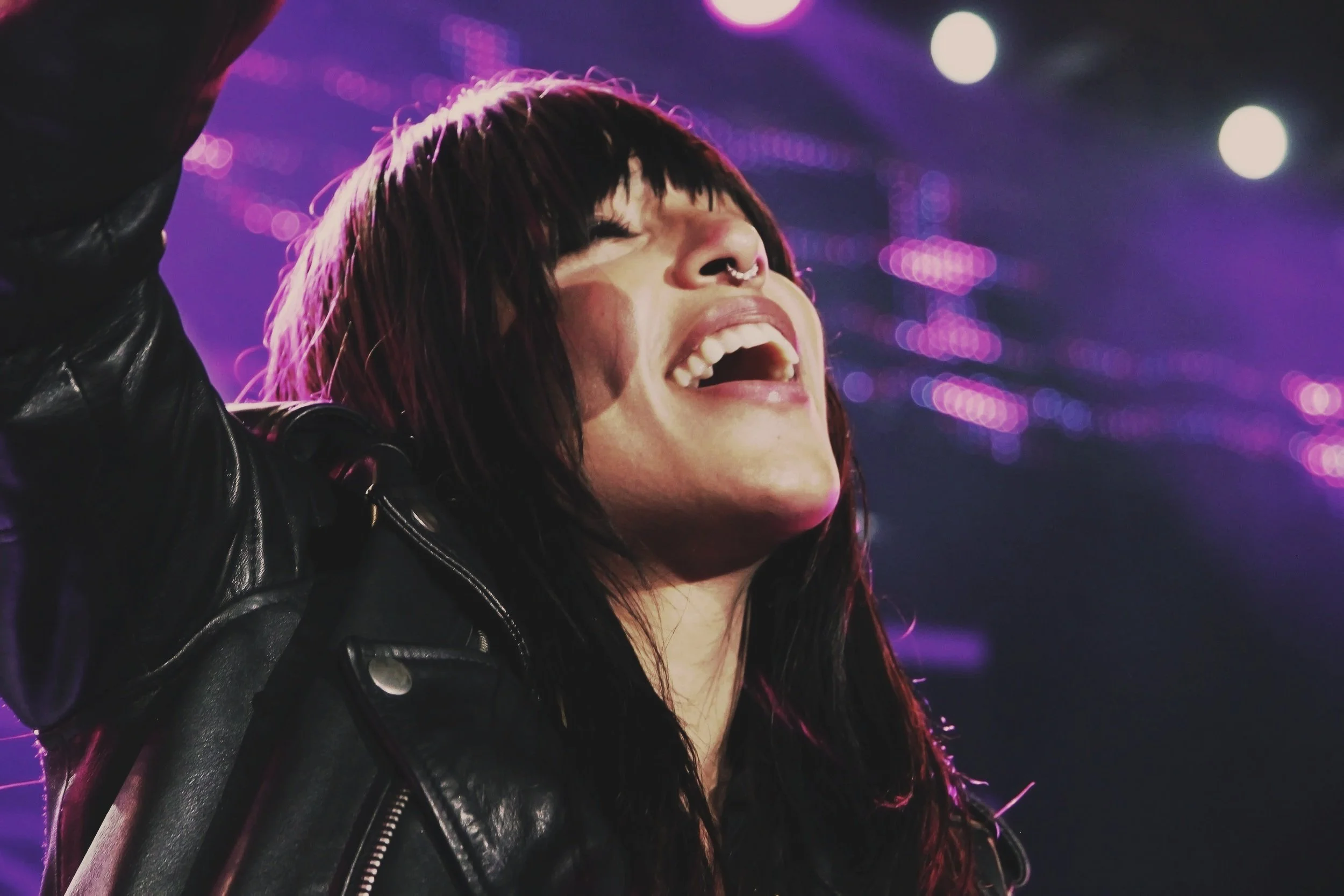
Loreen. Life changing at Eurovision 2023.
The United Kingdom used to take Eurovision really seriously. We have won 5 times and come second 16 times. We have sent greats such as Cliff Richard, Sandie Shaw, Lulu, Katrina and the Waves, Brotherhood of Man, Bonnie Tyler… the list goes on. But something happened in the new millennium where an attitude of arrogance took over, where we sent joke acts or average singers whilst other countries sent their best and most famous acts. This inevitably led to a series of low scores and last places, which exacerbated the dismissive attitude the UK had about Eurovision.
The go-to response is usually “nobody likes the UK” or “it’s all political”. Firstly, it is rare for a UK entrant to chart in the Singles Chart in their own country – if we don’t support our acts, then why should others? Secondly, everything is political. Thinking something should be non-political is a political choice in itself. The competitors for Eurovision are countries, who generally try to show some national identity, which inevitably brings geopolitics into play, which in turn means votes and reactions are often interpreted via the lens of international relationships. Neighbouring countries tend to have more aligned cultural tastes, which leads to “bloc voting”. Current events shape how countries vote, or do not vote. Just look at the overwhelming votes for Ukraine in 2022. Votes are a gesture of solidarity. Participation itself is political – there are multiple examples of countries choosing not to withdraw because the contest is seen as too liberal. During the Cold War, the Eastern Bloc of countries set up the Intervision Song Contest as a response to Eurovision. Performances can also carry subtle, or not so subtle political messages. Lucie Jones for the UK sang Never Give Up On You to a European audience, less than a year after the vote for Brexit. Georgia in 2009 entered a song called We Don’t Wanna Put In – a less-than-subtle dig at a certain Russian dictator. Everything about Eurovision is political – that is not something we should shy away from.
The dismissal of the UK at Eurovision also chooses to ignore some genuine successes we have had over the last twenty years – Sam Ryder, Jade Ewan, Blue, Lucie Jones and Molly all placed well. Even Remember Monday, who I found a personal aural assault, came 10th in the jury vote in 2025!
I digress.
Walk into a Eurovision party and it becomes obvious pretty quickly that the TV is only part of what’s going on. The real focus is the room itself. People talking over each other, reacting instantly, building running jokes as the night goes on. It feels less like watching something and more like being part of it. Nobody is just sitting quietly. People are scoring, predicting, arguing. Someone has printed scorecards or found an app. Categories range from serious to completely ridiculous. Every performance sparks a reaction: cheers, groans, debates about outfits, vocals, staging. Everyone becomes a judge, whether they know what they’re talking about or not. By the end of the night, it often feels like you’ve shared something, rather than just watched something.
So why is the Eurovision party the epitome of Third Spaces? Well firstly, it’s a neutral ground hosted in a home, bar or other community venue. There is no hierarchy here – unless it is at my house and then there is a hierarchy and you WILL remove your shoes when you come in. Everyone is equal here when it comes to the judging – nobody is an expert or has a vested interest here. It creates a social levelling, all about humour, entertainment, and individual taste.
The annual nature of Eurovision, with its individual country selection processes, semi-finals and finals creates a regularity and ritual to the event. I have watched Eurovision with the same friends for 10 years now. We went to Liverpool together for Eurovision in 2023 and to see Loreen perform in Manchester in 2025. It creates a bond that breeds anticipation and continuity. Life is busy, we all know that. People have kids, divorces and breakdowns. But you know what, we will definitely see you in May to watch the Eurovision final together.
The nature of the show also provides constant commentary and debate. Don’t like Austria’s opera entry? Don’t worry, Australia have wheeled out Delta Goodrem for the next performance. How many times a year do you actually engage in a debate with no consequence that doesn’t descend into death threats? Eurovision parties allow people to disagree and bond with whoever is in the room. You might not agree on the act quality, but you have gotten to know a stranger through your shared love of this show.
To understand Eurovision fully, you also have to understand its relationship with queer culture. Over the years, the contest has become more than just a popular TV event within LGBTQ+ communities. It has become a space of recognition, expression, and belonging, shaped as much by its audience as by its performers. Part of this connection comes from Eurovision’s embrace of theatricality and difference. It celebrates boldness, exaggeration, and emotional intensity, qualities that have long been central to queer forms of expression. Performances often blur boundaries between sincerity and camp, masculinity and femininity, irony and vulnerability. For many viewers, especially those who have felt outside the mainstream, this creates a sense of familiarity. Eurovision does not just tolerate difference; it puts it centre stage.
“Walk into a Eurovision party and it’s obvious pretty quickly that the TV is only part of what’s going on.”
There is also a strong history of queer visibility within the contest itself. From openly LGBTQ+ winners to artists who use the platform to explore identity and politics, Eurovision has offered moments of representation that feel both symbolic and personal. These moments resonate beyond the performances, shaping how audiences experience the event together. Watching becomes more than entertainment. It becomes a shared recognition of progress, struggle, and joy. The first time I ever watched Eurovision was in 1998, when Dana International won for Israel. She is transgender and that was the first time I was ever aware of that. As a child, that didn’t feel controversial and here she was getting international recognition and winning the contest – so why would I discriminate or be scared of her?
Eurovision parties amplify this sense of belonging. They function as informal safe spaces where people can express themselves more freely, whether that means dressing up, performing along with the acts, or simply reacting without self-consciousness. The tone is playful, but the underlying feeling is one of acceptance. For some, these gatherings provide a rare opportunity to be surrounded by others who share not just an interest in the contest, but a cultural sensibility. They’re cultural events, and cultural events can create environments where identity is not just accepted, but celebrated, and where community forms through shared enjoyment rather than formal structure.
Eurovision has always adapted easily to new forms of media, and today the experience extends far beyond the living room. Yet there is a noticeable difference between reacting online and being in a room with others. Digital spaces allow for scale and immediacy, but they can lack the depth of connection that comes from physical presence. A message typed into a group chat cannot fully replicate the collective gasp at a high note, or the laughter that spreads through a room when a performance takes an unexpected turn. Online, reactions are fragmented. In person, they are shared and felt at the same time. When the stage invader disrupted SuRie in 2018, the party I was at descended into chaos. When Sam Ryder was top of the scoreboard at the end of the jury vote in 2022, we were all jumping up and down and screaming together. Was it the magic of Eurovision or the copious amount of alcohol consumed – we will never know.
The idea of the Third Space has become more relevant as traditional social environments have begun to decline. Pubs close, community venues struggle, and more people work remotely, spending larger portions of their lives moving between home and work with fewer opportunities for informal gathering. In this context, events like Eurovision take on a new significance. They offer a reason to come together, even if only temporarily. And there is something valuable in their temporary nature. Because they happen once a year, they carry a sense of anticipation and occasion. This intentionality can make the connections formed during the event feel more vivid, even if they are brief. It is a reminder that community does not always depend on permanence, but on moments of shared attention. In a time when many forms of social connection feel mediated or diminished, Eurovision parties highlight a simple but powerful idea. People still seek out spaces where they can gather, react, and belong together. Even in a fragmented world, they will find ways to create those spaces for themselves. ⚭
Jon DellThe Eurovision Song Contest Final 2026 takes place 16 May