Brat Summer: A Retrospective
With new Charli XCX album Music, Fashion, Film imminent, Jon Dell looks back to that acid-hued summer of 2024 and asks: was it really that good?
I still can't see that particular shade of lime green without being transported back.
For a few months, it felt like the entire internet had been painted the colour of a highlighter pen. Every brand wanted to be brat. Every politician wanted to be brat. Every journalist was desperately trying to explain what brat meant to readers who were either already sick of hearing about it or had absolutely no idea what anyone was talking about. And yet, somehow, it worked.
Looking back now, it's tempting to dismiss Brat Summer as just another internet craze that burned brightly before disappearing into the same cultural landfill occupied by NFTs, Clubhouse and whatever happened to BeReal. But that doesn't quite feel right either. Brat wasn't just a viral moment. For a brief period, it became the closest thing we’ve had to a shared cultural experience on a global scale in the digital age except maybe that submarine imploding near the Titanic.
The album itself was fantastic, of course. Charli XCX had spent years building a reputation as one of pop music's most inventive artists, but Brat felt different. It was messy, emotional, euphoric and self-destructive, often all within the same song. It captured the strange contradictions of modern adulthood in a way that felt both painfully specific and weirdly universal. Which is why it hit me so hard.
I should probably admit at this point that I wasn't exactly the target audience. In 2024, I was a 34-year-old married accountant. If record labels were creating focus groups for a Charli XCX album, I suspect I would have been politely escorted from the building before the first (disco) biscuit was served. But Brat arrived at exactly the right moment in my life.
Like a lot of people in their thirties, I felt caught between two different versions of myself. Part of me still wanted to go out, stay up too late and pretend hangovers were something that happened to other people. The other part was worrying about career progression, family planning and whether I'd somehow reached an age where everyone expected me to have a coherent five-year plan. I didn't have a five-year plan. I barely had a Tuesday plan. Then I heard I think about it all the time.
I was standing in my very ordinary, very middle-class kitchen when it came on, and I remember feeling genuinely unsettled. Not because the song was shocking, but because it felt like someone had intercepted a private conversation taking place inside my head and set it to a downtempo synthpop beat. The anxiety around getting older, wondering whether you want children, questioning what your future is supposed to look like — it was all there. I've listened to thousands of songs in my life. Very few have ever made me stop what I was doing and think, "Hang on, how the hell do you know this?"
The same thing happened with 365. Following a bereavement, I'd spent much of 2024 wrestling with the uncomfortable feeling that a particular chapter of life was ending. The song's manic energy felt less like a party anthem and more like someone trying to outrun time itself. It was exhilarating, slightly chaotic and vaguely terrifying. Which, coincidentally, is also how I'd describe being in your mid-thirties.
Then there was the Girl, so confusing remix with Lorde. I remember shouting through the house for my wife to come and listen because I genuinely couldn't believe what I was hearing. In an era where most celebrities communicate through carefully managed statements written by at least three publicists and a lawyer, hearing two global pop stars openly discuss insecurity, jealousy and misunderstanding felt remarkably honest.
That's the thing that sometimes gets lost when people talk about Brat now. Yes, the branding was brilliant. Yes, the memes were funny. Yes, the green square was one of the most successful pieces of album artwork in recent memory. But the music absolutely carried its weight. It was delivered with honesty. Without the songs, none of the rest of it works.
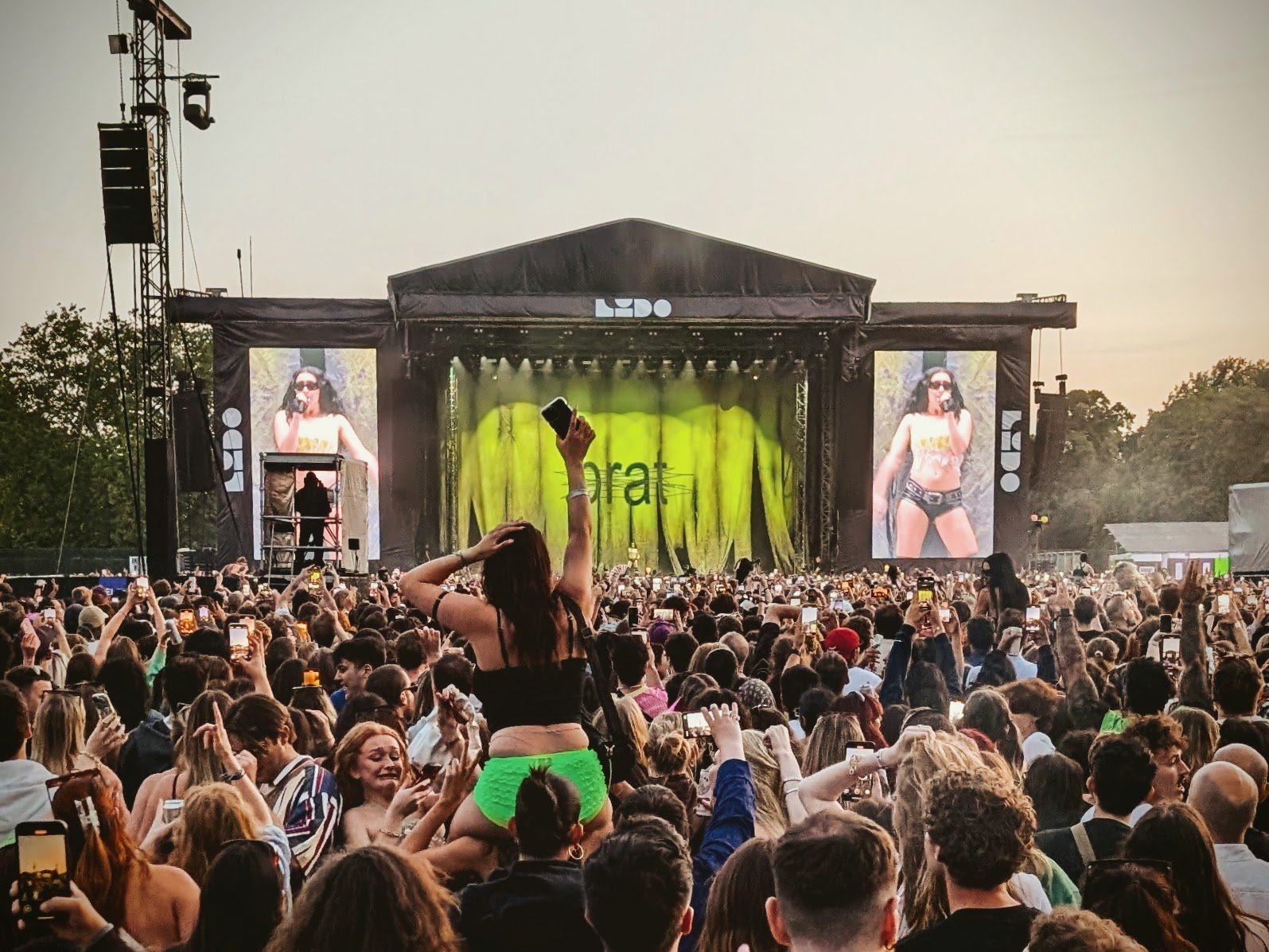
Brat Summer. A shared cultural experience.
Part of Brat Summer's appeal was that it arrived during a period when genuinely shared cultural moments felt increasingly rare. They still do. Streaming services have fragmented audiences. Social media algorithms have trapped everyone inside their own personalised reality. Most trends now explode within a niche community before vanishing entirely three weeks later. Brat somehow escaped that cycle.
Even people who had never listened to Charli XCX understood the reference. Your chronically online friend knew exactly what it meant. Your boss had probably seen enough memes to vaguely understand it. Your mum recognised the green square, even if she wasn't entirely sure why it kept appearing on her Facebook feed. At one point, Kamala Harris's campaign was embracing Brat imagery during a US presidential election. That sentence alone should probably be preserved for future historians. Brat may have been one of the final examples of internet monoculture — a moment where millions of people were participating in the same conversation at the same time. It wasn't just popular. It was unavoidable.
What made it resonate so strongly was the attitude behind it. The early 2020s were exhausting. We kicked off with a global pandemic and individually languished in our homes for months on end. As we returned to life, everything seemed to revolve around optimisation. Every app wanted to improve you. Every podcast wanted to maximise your potential. Every influencer had a morning routine involving ice baths, meditation and waking up at a time usually associated with commercial fishing operations. Brat arrived and essentially said: what if we didn't do any of that?
The brat archetype wasn't polished or perfect. She was glamorous and chaotic, confident and insecure, self-aware and self-destructive. She made bad decisions but wasn't particularly interested in apologising for them. Most people weren't actually living that lifestyle, of course. The majority of Brat Summer participants still had jobs, responsibilities and standing orders to worry about. Nobody was genuinely abandoning adulthood to spend six consecutive months at warehouse raves. But people enjoyed the fantasy. And after years of being told to optimise every aspect of our lives, that fantasy felt surprisingly liberating.
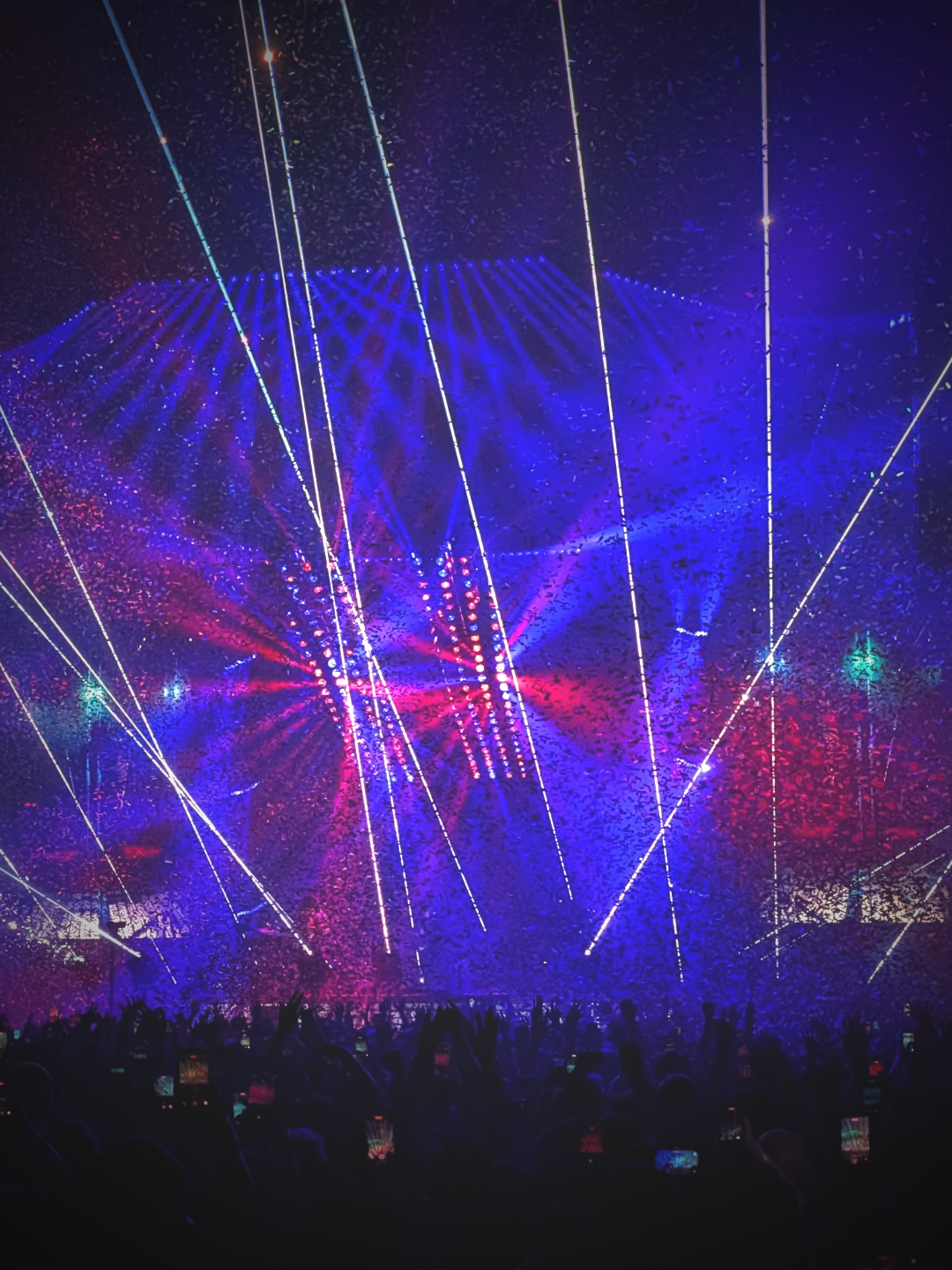
I felt it most clearly when I saw the Brat tour. I've been to plenty of concerts, but the atmosphere inside that arena was unlike anything I'd experienced before. Twenty thousand people screaming every lyric for two straight hours created an energy that felt somewhere between a religious gathering and the opening scenes of a disaster film. The noise was extraordinary. If that wasn't enough to bring about the end of civilisation, it certainly felt like a decent rehearsal.
Brat wasn't perfect. The endless brand activations became exhausting. Every company on earth suddenly seemed convinced that adding lime green to a social media graphic constituted cultural relevance. LinkedIn became particularly unbearable, as marketing executives attempted to explain why enterprise software solutions were, in fact, extremely brat. By August, the cracks were beginning to show. The internet trend lifecycle followed its path from exciting to omnipresent to mildly irritating. Plenty of people were ready for Brat Summer to end long before autumn arrived. But nostalgia has a habit of sanding off those rough edges. We remember the first time we saw the album artwork. We remember the songs. We remember the jokes. We remember how it felt. What we don't remember quite as clearly is the five hundredth brand trying to join in. So was Brat Summer actually that good?
Honestly, yes.
Not because it transformed culture forever. Not because it invented entirely new ideas. And certainly not because Charli XCX somehow solved the fundamental problems facing modern society with a fluorescent green JPEG. Brat mattered because it gave people something to share. Genuinely excellent music. A memorable aesthetic. Humour that landed more often than it missed. But most importantly, permission to stop trying so hard. For one summer, nobody seemed particularly interested in becoming the best possible version of themselves. And speaking as a 34-year-old accountant having a minor existential crisis in a nice kitchen, that was exactly what I needed.
Maybe that's why Brat remains so fondly remembered. Not because it was perfect, but because for one bright, chaotic, neon-green summer, nobody was pretending to be. ⚭
Jon DellMore 2G4