DJ Tems
London-based DJ Tems chats to 2G4 about storytelling, connection, and the importance of curating originality.
Let’s start at the beginning. What originally drew you to DJing?
Moving into my own flat I realised I could blast music as loudly as I wanted. Every Friday, before I’d even logged off work, I’d have huge speakers going and I’d throw myself a one-person house party. I’d dance around the flat pretending I was DJing to a crowd, which sounds ridiculous now, but this was during lockdown and music became my escape. It made me feel connected to something bigger when everything else felt shut down.
When restrictions eased, I’d make playlists for parties, changing tracks on the fly, trying to keep the energy going. Friends kept saying ‘You should be a DJ,’ but I wasn’t sure. Is a love of music enough to qualify you to DJ?
My brother and sister-in-law bought me a set of decks and something clicked. I started watching tutorials, practising privately, then eventually made an Instagram page and discovered networking events for DJs, especially female DJs. Going to those events was terrifying, but I wanted to challenge myself. Even if nobody booked me, at least I’d tried. And honestly, even if it had stayed as just me in my flat dancing alone with loud music, I still would’ve loved it.
DJs variably describe their work as a performance, as telling a story, as a relationship with the crowd, or as an event or a party. How do you approach the role?
I think it depends whether you’re doing it as a hobby or treating it professionally. When it’s just a hobby, you’re experimenting and having fun. But when you want bookings, DJing becomes much bigger than just playing songs. What makes you memorable? For some DJs it’s technical skill. For others it’s music selection, personality, fashion or branding. There are so many DJs now that people connect to the full package, not just the decks.
Different events need different approaches too. A wedding for example is completely different from a club set. In clubs, it’s about performance and momentum. People feed off your energy. Nobody wants to watch a DJ looking bored while touching knobs like they’re operating industrial machinery. For me, DJing is really about creating a feeling. Reading the room is one of the most important parts. If people leave feeling something – joy, nostalgia, excitement, freedom – then you’ve done your job.
If it’s an R&B crowd, for example, you probably need songs people instantly recognise and connect with. That doesn’t mean you can’t be creative, good DJs should surprise people too, but there’s a balance. If you only play obscure tracks, you risk losing the room. A lot of it is about flow. So it is about that storytelling. You can’t suddenly jump from Rihanna into Michael Jackson with zero transition and expect it to feel natural. Or throw in a random Katy Perry request in the middle of a deep R&B run because one drunk bloke from Wakefield demanded it.
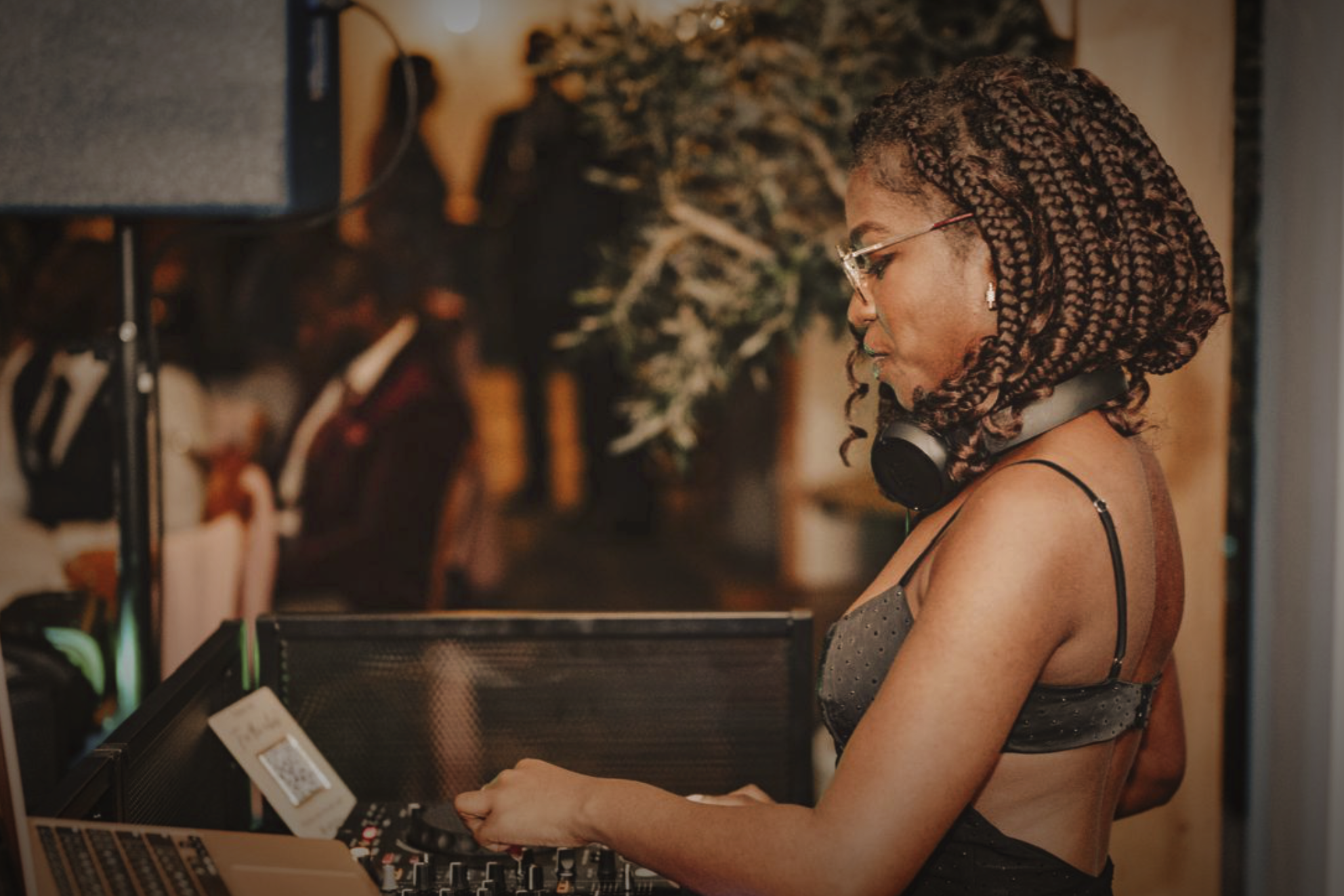
DJ Tems
I have definitely been guilty of some obscure requests in the past. I imagine they can be annoying if you’re focusing on creating an emotional arc across the night.
Requests are funny because every DJ handles them differently. Some love them, others try to make room for them, and many politely nod and immediately ignore them forever. I did a wedding once where the groom loved hip-hop and R&B while the bride wanted indie-pop tracks mixed in. I planned carefully when to introduce those songs, but halfway through the night someone from the wedding party came over and said, actually, she doesn’t want the indie songs anymore. I think she realised what I could already see: people were dancing, the energy was working, and the collective atmosphere mattered more than hearing every individual favourite song.
Is there that one song that you can break out in case of an emergency to get the energy up? Off the top of my head, I’m thinking Sweet Caroline, which I absolutely hate, or Yeah by Usher.
I don’t think there’s one magical song that works for every crowd. But songs with dances attached to them are powerful because people immediately participate. Tracks like Jerusalema or Candy work because people already know the moves. The second they come on, barriers drop and suddenly everyone joins in. But really, it always comes back to knowing your audience. Are they into nostalgia? Mainstream hits? Afrobeat? House? Underground music? That’s what I enjoy most about DJing, figuring people out in real time.
Before Covid, nights out felt more spontaneous. You could wander through Soho or Shoreditch, hear music coming from somewhere, see a crowd outside and just go in. Now nightlife feels much more event-based and curated. Promoters rely heavily on specific lineups, genres, and experiences to pull people in. You’ll see ten different events advertised for one Saturday night alone: Afro House events, R&B nights, house nights, themed parties. And people choose very intentionally because travelling into London feels like a commitment now. Nobody wants to spend an hour on the Tube only to end up somewhere dead by 11pm.
I remember being in Bali once and randomly ending up in a club we’d never planned to visit. Those unplanned nights often become your best memories. That spontaneity feels rarer now. But I don’t think nightlife has disappeared, it’s evolved. It’s become more community-based and genre-specific. And music spaces still create something really unique socially. You can stand in a room full of strangers and still feel connected because everybody’s sharing the same atmosphere.
I saw Black Coffee perform outdoors near the Cutty Sark last year and it felt surreal. The sun was setting, everyone was dancing, and there was this shared sense of joy across the whole crowd. I remember looking around thinking I’m so happy to be here right now. That’s what music spaces do. They make people feel freer, more expressive and more emotionally open. Sometimes they make people feel more themselves than everyday life does.
What is it about music that allows it to do something that conversation alone can’t?
I think music connects people for a lot of different reasons, and that’s why I’m so passionate about it. Some people only care about the beat – as long as it sounds good, they’re happy. I’ve had so many conversations where people say, ‘Nobody cares about the lyrics, just give me a good beat and I’ll vibe to it.’ And fair enough, because rhythm alone can make people move, dance and completely lose themselves in a song.
But for me, music is deeper than that. I care about the artistry behind it too. I want to know if the person making the music is actually talented, what they’re trying to say and whether there’s real emotion in it. That’s what makes certain songs stay with you.
Sometimes music taps into emotions you didn’t even realise were sitting inside you. A heartbreak song for example can affect people who aren’t going through heartbreak. You hear the emotion in the voice, the lyrics, the feeling behind it, and suddenly everyone around you is singing along like they’ve lived that exact experience. I think that’s why music is so powerful socially as well. On nights out, people who have never met before suddenly connect because they recognise the same song or react to the same moment in a set. You don’t need conversation. You just look at each other: ‘Oh my gosh, this song!’ and connect.
And I think that’s why music spaces can feel so freeing. Whether you’re dancing in a crowd, listening alone in your headphones or sharing a song with someone else, there’s this emotional release that comes with it. For a lot of people, music becomes a way to cope, connect and just feel alive.
What do you hope people feel when they leave one of your sets?
For me, originality is everything. I never want to feel like I’m just blending in with everyone else. If I know I’ve got a set coming up, I’ll spend time thinking about how I can make it different and memorable. Of course, DJs are always going to overlap on certain tracks – especially if new people are entering the room at different times – but I still want people to leave remembering me.
That’s why I care so much about making people feel something different through my sets. Recently, I DJed abroad and a woman came up to me afterwards and said ‘I haven’t heard a good DJ in a while.’ That genuinely meant so much to me because sometimes DJs finish a set and nobody even acknowledges them. People forget DJs are human too – they notice reactions, feedback and energy from the crowd.
When someone takes the time to say they connected with what I was doing, it stays with me. I’d always rather leave a lasting impression than just be forgotten five minutes later. For me, being memorable is more important than simply fitting in. I don’t just want someone to say ‘Yeah, she was good.’ I want them to say ‘She was different.’ ⚭
Jon DellMore 2G4