Walking with Friends
In Big Walk, players are looking for a little less action, and a little more conversation, please.
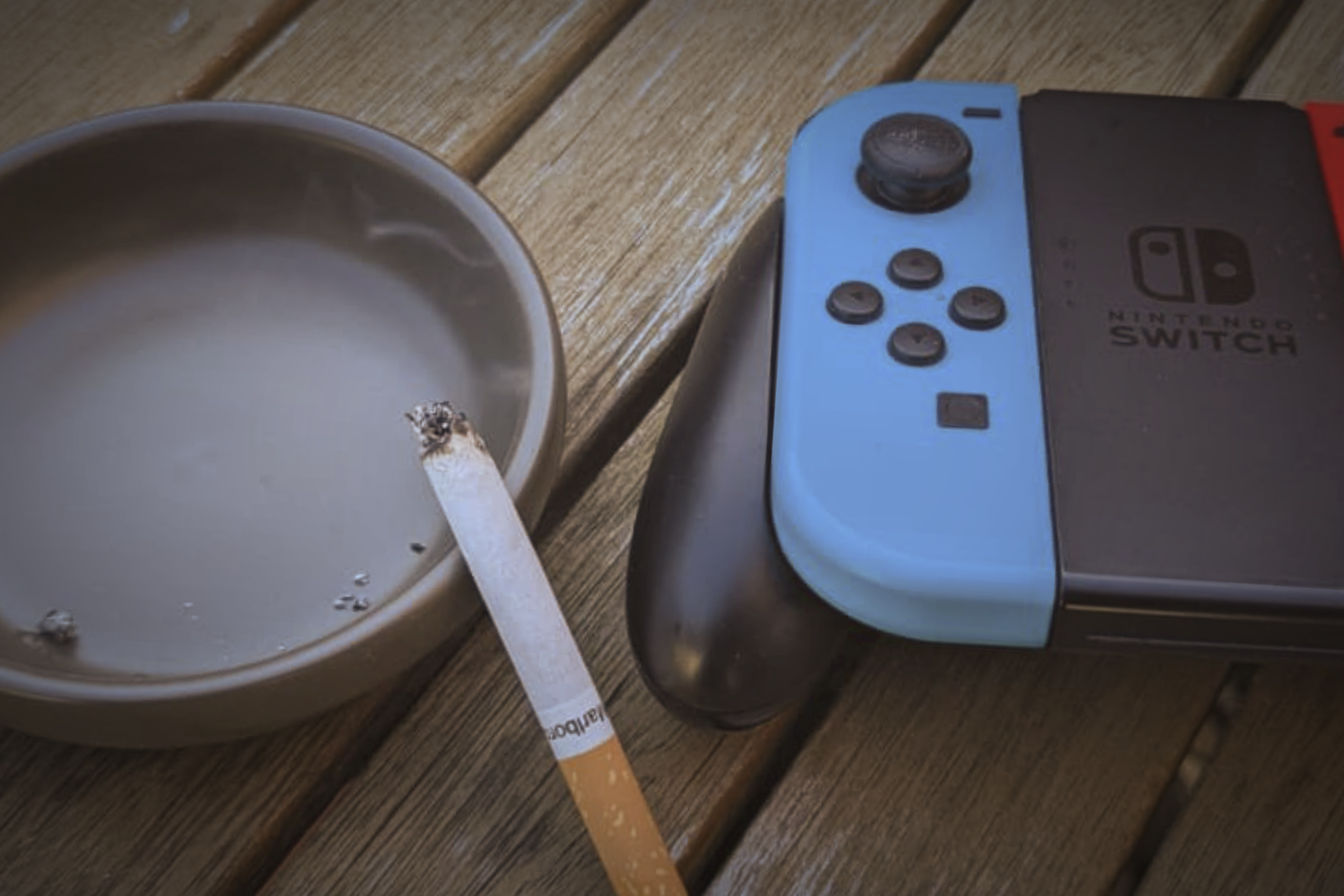
Wednesday night is games night. A vestige of the dark days of lockdown that kept us sane, and continues to do so. We tried Zoom-call Dungeons & Dragons but most weeknights people are tired from work and don't want to concentrate too much, so we end up heckling a bad film on Discord instead, or playing video games. These tend to be co-operative and player versus environment rather than competitive and player versus player, and are often quite silly. There's RV there yet? where four chain-smoking potato-shaped men attempt to navigate their motorhome off-road through various national parks, complete with rickety bridges, lava and venomous snakes. Or Burglin’ Gnomes, where four chain-smoking potato-shaped little gnomes parachute in to rob and terrorise a (frequently naked) elderly man in his own home to appease a large sentient mushroom. And we eagerly await the upcoming Call it a Day, where four chain-smoking potato-shaped house renovators work to the absolute average of their capabilities, bumbling through patchwork paint jobs and clumsy removals.
These games are part of an emerging genre of hastily made (or at least giving the impression of hastily made) online co-op indie titles that gen-z wordsmiths have neologised as ‘friendslop’. I suppose the distinction between friendslop and other co-operative games is that friendslop is fun primarily because of the friends; the core gameplay loops are simple with a low barrier to entry, and would not hold your attention long with strangers or on your own. The premise tends to be ridiculous, and there's often some jank (hence the slop), which can add to the experience: so long as it's not game-breaking it can be quite funny to see your mate get caught on some invisible level geometry and have his little gnome arm (human sized lit cigarette in hand) violently rip off as he tries to free himself. They also sport features shared with games in the roguelike genre, namely procedurally generated levels that are different every time (ostensibly to add replay value) and ‘permadeath’/failure being a real risk (so the time commitment to a session can be short).
Enter Big Walk, House House’s latest release, their first since the wildly popular Untitled Goose Game in 2019. In UGG, you play as an angry goose who must wreak havoc (in contravention of everything this magazine stands for) in its community: a small English village. They did add a two-player mode for UGG, but Big Walk puts multiplayer front and centre, you can’t play it alone. The premise is simple. On Wednesdays, we are four (vaguely) potato-shaped guys going for a big walk around an island. The game uses proximity chat, such that we can only hear one another when standing close by. Dotted along the way are puzzles, which unlock small red collectibles that sort of resemble the players’ rotund bodies (my friends and I alternately term them ‘eggs’ or ‘children’), and are in turn used to unlock keys that progress the game. Standard stuff so far. The puzzles are all centred around teamwork and communication, often removing speech as an option: players must communicate with arm gestures through soundproof glass, or by flashing lights, signs, or laser pointers and the like.
Friendslop was originally a pejorative to describe low-effort attempts to cash in on the popularity of Among Us when COVID forced an enormous captive audience, but now the term is used as a neutral catch-all for indie co-op games. Big Walk certainly fits the ‘friend’ criteria but there’s not a hint of slop here. First, the game map is gorgeous, a scaled approximation of Wilson's Promontory National Park in Australia, juxtaposed with simple, primary-coloured geometric structures that comprise the puzzle areas. It’s hand-made, not built with procedural generation, and the day–night cycle is maybe 15 minutes, so you experience frequent dawns and dusks in which the lighting plays off the foliage and hills wonderfully. A lot of the game's after-dark light sources are illuminated buoys, which can be toggled to emit an analogue warmth that adds a feel of campfire to the coziness, and serve to dot the landscape of areas you’ve already explored. The proximity chat has just the right range – you have to stay fairly close, but not annoyingly so – and frequently leads to hilarity, as expletives (and laughter) rapidly trail off from a careless party member who’s strayed off the edge of a cliff or ledge. When this inevitably happens, and you're separated from your friends, the game suddenly feels vast and alone. There are no enemies in Big Walk but when the sun goes down you feel isolated and nervous in the near pitch black, especially if you aren't carrying a light. The seconds and minutes pass as the oppressive darkness weighs on you: “Where are they?”. Pensive moments like this make your eventual reunion all the sweeter: a flare goes off in the distance, your mate comes on over the walkie talkie to direct you back to the group, back to the camaraderie. You can only carry one item at a time (a backpack lets you carry a second but the item can only be placed and removed by another player) so you, as a group, constantly need to choose between light sources, communication tools, maps, etc., especially when you've collected a few eggs (/children), which also need carrying until you reach somewhere to deposit them. Sometimes the choice is easy. One Wednesday my friend is behind schedule and so joins us in the game having just finished making dinner. I happily forsake all items and carry my pal around while he eats so he can be a part of the conversation.
This particular friend group tends to always meet up/hang out as a group (calendric and geographic limitations means it is easier), so when Big Walk inevitably splits the party, either due to misadventure or as part of a puzzle, I relish those moments of dialogue with my friends individually, sometimes for the first time in a while. Conversation, it seems, is the central theme of Big Walk, more than mere communication. One of the puzzles we found after unlocking a few regions of the map resembles a living room with a big seven-segment timer on the wall. Starting the timer locks the door and opening it again resets it. The game makes you all sit down together on a virtual sofa and wait for five minutes to get your egg-child. There's no gameplay in that moment to discuss, nothing to distract people, just you and your friends. So we just talked. About life, jobs, pets. We all tried to balance on each other's heads. Maybe that sounds like lazy game design but I’d argue it’s dead nuts for what they’re aiming for. It’s the only puzzle so far that’s been like it, so it works as a nice touch. I often play Xbox with another friend who lives in London, and the first 20 minutes of every session are spent just talking over nostalgic Gregorian chanting as the Halo splash screen implores us to start playing. Once, one of us hadn't downloaded a large update required to play so we just rang each other to chat like it was the ‘90s or something. Dungeons & Dragons, Halo, Peak, Fall Guys – they’re all vehicles for hanging out with your friends and whether the game is complicated, or whether it'd be fun solo is largely irrelevant. Big Walk is a lovingly and painstakingly crafted monument to that thesis statement. As soon as I figure out the button that lets you smoke, it might be the perfect Wednesday night game. ⚭
Tom GalvinMore 2G4