Algrano Bakes
From a gluten-free bakery in Barcelona comes a community built around effort, trust, and the increasingly radical idea that eating well should feel normal, and normal eating should feel good.
For Mire Aleu, the founder of Algrano Bakes, the mission was never really about bread. “It’s not about the gluten-free part,” she says early in our conversation. “It’s about creating products that genuinely support your day-to-day life.” That distinction sits at the centre of everything Algrano has become. Yes, the business sells bread (alongside crackers, granola, cookies, and bagels). Yes, the products happen to be gluten-free. But the real purpose behind the bakery feels closer to rebuilding people’s relationship with food itself – moving away from convenience, guilt, and over-processing, and back toward nourishment, ritual, and community.
Born and raised in Barcelona, Mire didn’t grow up with dreams of becoming a baker. For most of her twenties, she barely cooked at all. A trained lawyer specialising in startups, she spent years surrounded by founders, investors, and entrepreneurs. Amongst them, she realised she wanted to build something herself. But what?
“I always knew I wanted my own business,” she says. “I just had no idea what it would be.” Working punishing hours in corporate law, the grind gave way to relentless fatigue. But it was more than just the work at the root. Mire confronted something many people quietly ignore for years: the food she was eating was making her feel awful. “I’d arrive at work exhausted already,” she says. “I realised I needed food that actually helped me function.”
Her curiosity led her to the Institute for Integrative Nutrition in New York, and a training course to become a health coach. Science-led and people-focused, what stayed with her most wasn’t a single dietary philosophy, but the understanding that nutrition isn’t universal. “What works for me might not work for you,” she explains. “But the one thing almost every approach agrees on is reducing processed food.” That principle became the foundation of Algrano. Spend five minutes talking to Mire and one thing becomes immediately obvious: she cares deeply about ingredients. Not in a fashionable, Instagram-caption sort of way, but with the intensity of someone who has genuinely seen the difference good food can make. “The shift you feel when you stop eating processed food is huge,” she says. “Once you experience it, it’s hard to go back.”
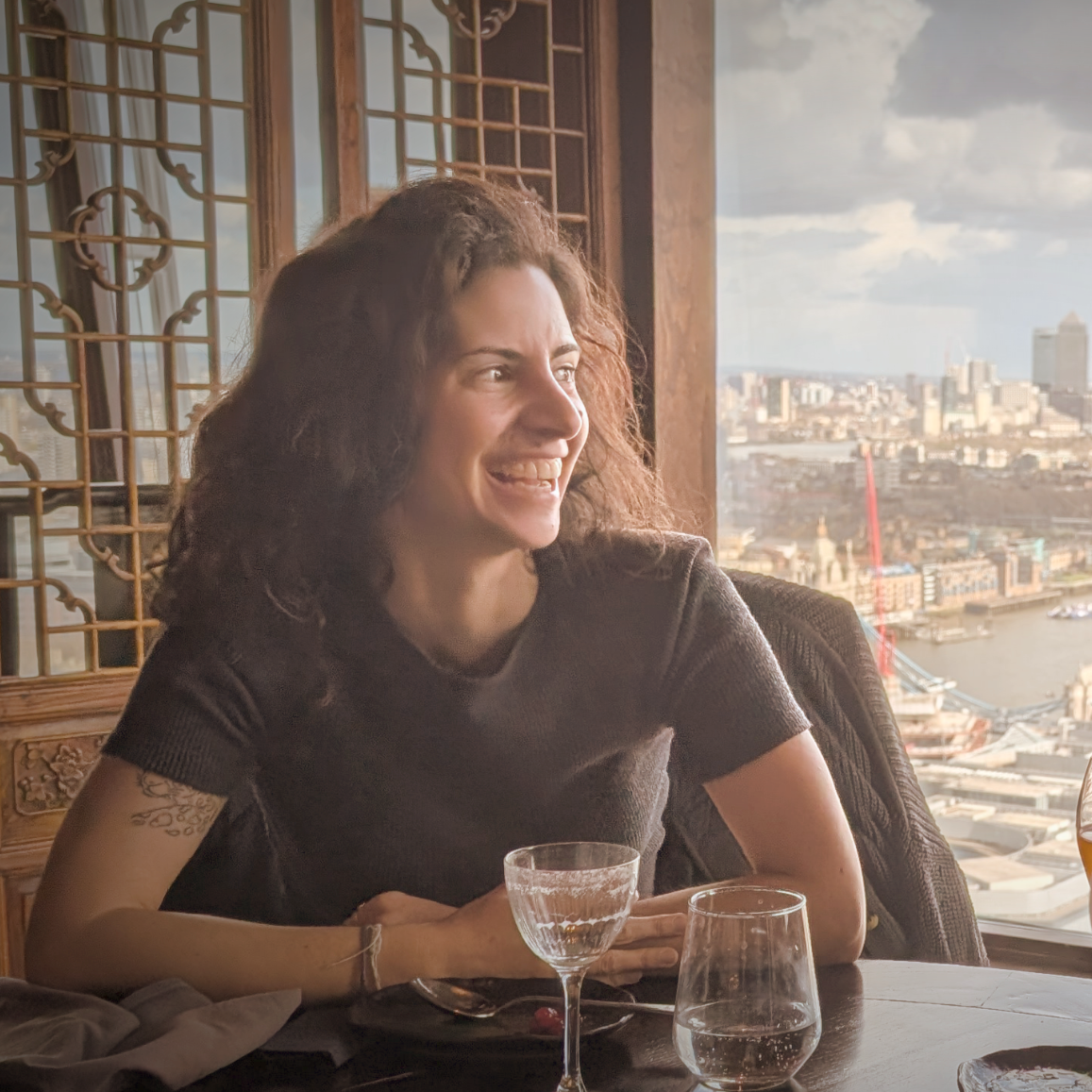
Algrano’s Mire Aleu
The bakery’s products are intentionally flexible. Some are keto; others are grain-free. Some cater to paleo diets; others simply prioritise clean ingredients. The point isn’t dogma, it’s about giving people options built around real food. There’s also something quietly rebellious about that approach in an industry where “healthy” often means little more than clever marketing. Mire talks about reading supermarket labels with visible frustration. “You see products advertised as healthy, but then you look at the ingredients and they’re still full of additives, starches and sugar.” Prioritisation of profit is often to blame. Mire laughs while recalling the price difference between white sugar and agave syrup. “You can buy twenty-five kilos of white sugar for almost nothing,” she says. “Then you look at the healthier alternatives and suddenly it’s over a hundred euros.” Choosing better ingredients means lower margins, higher production costs and harder business decisions. But for Mire, compromising would defeat the purpose entirely. “You have to be really committed,” she says. “Otherwise it’s easy to slowly dilute the vision.”
Of course, caring about food and knowing how to build a bakery are very different things. “Let’s not forget,” Mire laughs, “I’m a lawyer.” The technical side of baking – especially gluten-free baking – proved brutal. Without gluten, bread loses the elasticity and structure that make traditional loaves soft and airy. “There were so many disasters,” she says. “Some breads came out completely flat. Others turned rock solid the next day.” One batch of loaves became mouldy after only a couple of days, a victim of excess moisture. Other experiments simply collapsed. “I didn’t want to sell anything until it felt right,” she says, with a refusal to settle on any product she wouldn’t wish to eat herself. The main aim was to find replacements for the gums and stabilisers used most commonly in gluten-free products, and Algrano experimented with ingredients like flaxseed flour, almond flour and buckwheat to create structure naturally. The process took six relentless months.
But long before the nutrition courses, test kitchens, research and recipe testing, there was something else underpinning Mire’s connection to food. “One of the biggest differences I noticed between Spain and the UK, where my husband’s from, is that in Spain sitting together at the table is still part of everyday life.” She pauses for a moment before continuing. “In the UK, eating sometimes feels transactional. You eat quickly and move on. But growing up, even if the food wasn’t fancy, we sat together every day.” That memory – the routine of gathering around food rather than simply consuming it – quietly shaped the philosophy behind Algrano far more than any nutrition textbook ever could. Because what Mire is ultimately trying to create isn’t “health food” in the sterile wellness-industry sense. It’s food that supports real life: busy mornings, family breakfasts, long workdays and shared routines. “We’re not a bakery for weekends,” she says. “We’re a bakery for the day-to-day.”
By the time Algrano launched publicly at a gluten-free fair in Barcelona, the business barely felt ready. The website was unfinished, and the products had only recently stabilised. The entire team was exhausted. But through all the research, all the effort, all the love, something unexpected happened – success. People loved the bread. Visitors reacted with disbelief that the loaves could taste and feel like “real” bread without the usual processed ingredients. “That was probably the first moment where we realised people really got it,” Mire says. For a business built around trust, that validation mattered even more than the sales.
Algrano’s growth since then has been driven almost entirely through word of mouth and community. No aggressive advertising or influencer gimmicks, just people talking. Mire intentionally partnered early on with nutritionists, doctors and health professionals whose audiences genuinely cared about food quality. Some collaborations happened organically; influencers tried the products and recommended them without payment. “We had nutritionists telling patients to buy our bread,” she says. “That was surreal for me.” The effect rippled outward. Customers dealing with gut health issues, food sensitivities, or inflammatory conditions arrived through trusted recommendations.
At first, Mire resisted social media. “For six months, you wouldn’t see my face anywhere,” she says. “I hated the idea of being visible.” But she soon realised people weren’t just buying bread, they were buying into the story behind it. When she started speaking openly about the business, the engagement she was getting changed. “I realised people actually felt involved,” she says. Customers ‘liked’; they replied. They voted on branding decisions. Some even designed their own versions of Algrano’s signage and sent them through Instagram messages. It transformed the business from a transactional relationship into something closer to participation, a sense of connection through food that feels especially important in a time when convenience is king and consideration is neglected. Where algorithms tell people what to eat, while supermarkets flood shelves with products designed more for shelf life than nourishment, Algrano quietly pushes back, through small acts: slowing down, reading labels, choosing ingredients carefully, and creating products meant to support everyday life rather than simply fill gaps between meetings.
Toward the end of our conversation, Mire becomes reflective about entrepreneurship itself. She’s wary of the glossy “follow your passion” culture that dominates social media. Ultimately, it comes down to honesty. “It’s become trendy to romanticise starting a business,” she says. “But the reality is incredibly hard.” She talks about imposter syndrome. She jokes about not fully knowing what she’s doing half the time. There’s no illusion of overnight success here. Algrano exists because of long hours, relentless experimentation and an almost obsessive commitment to getting things right. But the brand also feels deeply relatable. “I’m not a nutritionist,” she says. “I’m not the head baker either. I’m somewhere in between.” She speaks more like a curious participant – someone still learning, and doing it alongside the people buying her products.
The name “Algrano” itself translates roughly as both “grain” and “to the point” in Spanish – a mission statement for the entire business. Strip things back and focus on what matters. It applies equally to the recipes, the branding and the wider philosophy behind the company. That authenticity, that thrust for connection, that’s Algrano’s appeal. Customers don’t feel like they’re being sold perfection, they feel invited into a process. Because at its core, Algrano isn’t really selling gluten-free bread. It’s selling trust. Trust that ingredients matter. Trust that healthy food doesn’t need to feel restrictive. Trust that eating well can still feel joyful, communal, and deeply human. Perhaps most importantly, it’s reminding people that food was never merely functional. It was always meant to bring us together. ⚭
Jon DellAlgrano Bakes is open online and Mon—Thu, 08006 Barcelona
More 2G4